
Polyaspartic vs. epoxy
Polyaspartic vs. epoxy: what actually happens after a few winters
If you are comparing garage floor quotes, the chemistry matters more than the price per square foot. Here is the honest difference between polyaspartic and polyurea floors and epoxy, and why Comer & Cross doesn’t install epoxy.
Quick answer
The quick answer
Polyaspartic outlasts epoxy. It bonds to ground concrete, flexes with the slab instead of cracking, cures in hours instead of days and does not yellow in sunlight. Epoxy is cheaper on day one and usually costs more by year ten, because it gets redone. Our floors use a polyurea basecoat under a polyaspartic topcoat, installed in one day by our own crews in 14 states and Washington, D.C.
Durability and hot-tire pickup
Epoxy cures hard and brittle. When a hot tire parks on it, the film softens, sticks to the tread and peels up in patches; the same rigidity cracks when the slab moves in a freeze-thaw winter. Polyaspartic stays flexible, resists hot-tire pickup and moves with the concrete, which is why the floor still looks new after a few winters.
Cure time: hours vs. days
Epoxy needs three to seven days to cure before you can park on it, and it needs warm, dry weather to do it. Polyaspartic and polyurea cure in hours, even in a cold garage, which is how our crews grind, repair and coat in one day and you park the next.
UV yellowing
Sunlight turns epoxy amber and chalky, starting at the garage door and spreading inward. Polyaspartic is an aliphatic polyurea, which means it is UV-stable: the flake colors you pick stay the colors you see, indoors and out.
Cost over 10 years
An epoxy kit is the cheapest option on day one. Over ten years most epoxy floors are redone two or three times or torn out, and each redo means grinding off the old film first. A one-day professional coating with a 15-year warranty is installed once. See what drives the cost of a garage floor coating.
Head to head
Epoxy vs. polyurea / polyaspartic
| Epoxy | Polyurea / polyaspartic | |
|---|---|---|
| Strength | Hard but brittle | Flexible, built to outlast epoxy |
| Cure time | 3–7 days | Hours (1-day install) |
| UV resistance | Yellows and chalks | UV-stable, no yellowing |
| Hot-tire pickup | Common | Resistant |
| Freeze-thaw | Cracks with slab | Flexes with slab |
| Outdoor use | Not recommended | Patios, driveways |
| Typical lifespan | 1–7 years | 15+ years |
| Warranty | Often 1–2 years | 15-year warranty |
Watch
Polyaspartic vs. epoxy in 90 seconds
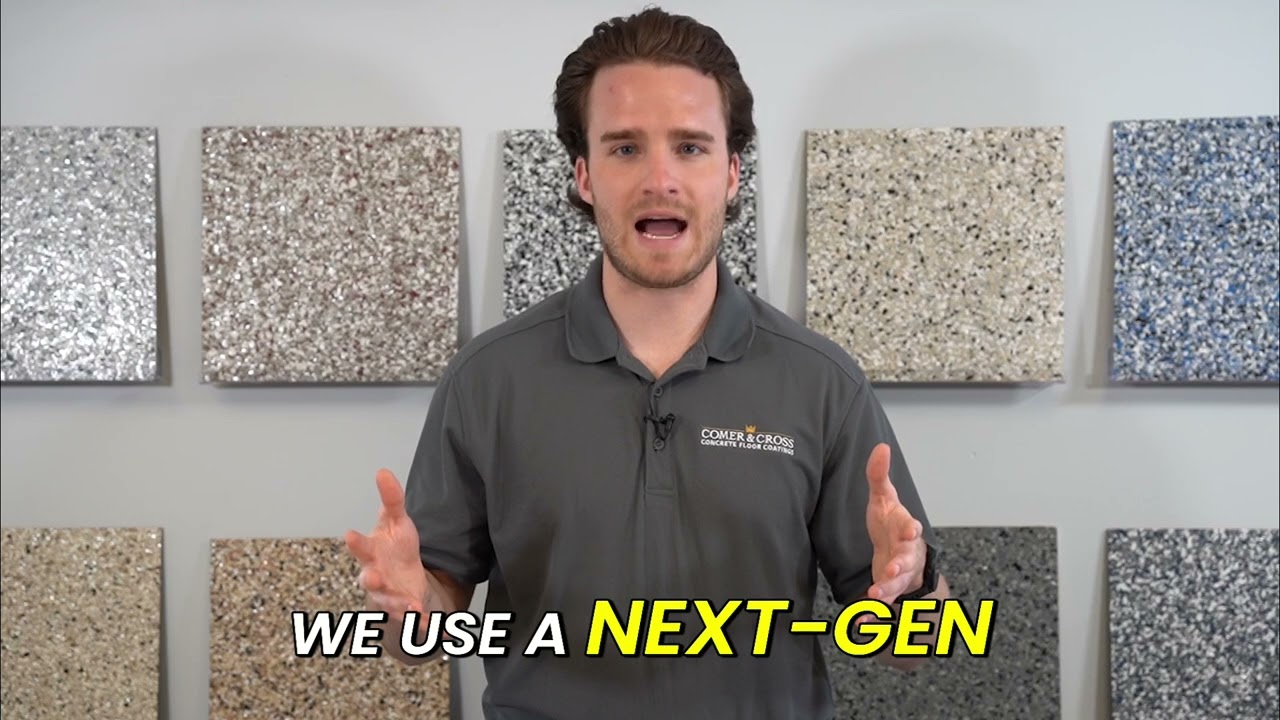
Why we build on a polyurea base
The topcoat gets the attention, but the basecoat does the work. Our polyurea basecoat is rolled onto diamond-ground concrete, bonds into the pores and stays flexible for the life of the floor, so cracks in the slab do not become cracks in the coating. Decorative flake goes into the wet base, and the polyaspartic topcoat seals it. That combination is America’s Strongest Coating Process. See the full garage floor coating process.
Polyurea vs. epoxy
People also ask about polyurea vs. epoxy directly. Polyurea is the family of chemistry used in truck-bed liners: it is elastic, bonds aggressively and tolerates moisture far better than epoxy, which is why we use it as the base layer under every floor. Polyaspartic is a slower-setting, UV-stable type of polyurea, which makes it the right topcoat. Epoxy is a different resin altogether, and the one we replace most often.
Comparison FAQs
Common questions
Can you coat over my old epoxy?
Only if it is fully bonded, and it rarely is. We typically grind failing epoxy off completely so the polyurea bonds to concrete, not to a layer that is about to let go.
Is polyaspartic the same as “polyurea”?
Polyaspartic is a type of polyurea. We use a polyurea basecoat for flexibility and adhesion, and a polyaspartic topcoat for UV stability and chemical resistance.
Why is polyurea more expensive than epoxy?
The materials cost more and require trained installers because of the fast cure. You are paying for a floor that lasts 15+ years instead of 3.
See what your floor would cost
Book a free estimate. We measure, check the concrete, bring color samples and leave a written quote. Current offer: Up to 50% OFF install + 15-year warranty.
No obligation · Safe, secure and confidential · Backed by our 15-year warranty